
Written by Luke Sloan
23 Nov 2026
#Control the Search, Strengthen the Deal: Privacy Management for Professional Athletes.
Before a general manager makes an offer, before a brand sends a deal, before an agent returns a call, someone types the athlete’s name into a search bar. Most athletes have never seen what comes back.
At Decisive Resources, we think that is backwards. Your name is the asset your career is built on. You should be the one who decides what it says about you: what stays private, what is visible, and what people see first.
Four very different groups research an athlete, and all of them start with what is already public.
| Who is looking | What the public record shows |
|---|---|
| Teams | ESPN spoke with four NFL teams in 2017 and all four said social media was part of scouting. One used software that could surface posts a prospect had deleted. |
| Brands | BakerHostetler’s 2026 playbook for brands tells sponsors to review an athlete’s social media and reputation before signing, and to write in a morals clause that lets them pause or end the deal. |
| Criminals | The NFL warned teams in 2024 that burglary crews were using public records to find players’ addresses and tracking the social media of players and their families, Sports Illustrated reported. |
| Angry bettors | An NCAA study verified 5,020 abusive posts aimed at athletes, coaches and officials, with more than 12% tied to sports betting, Legal Sports Report wrote. |
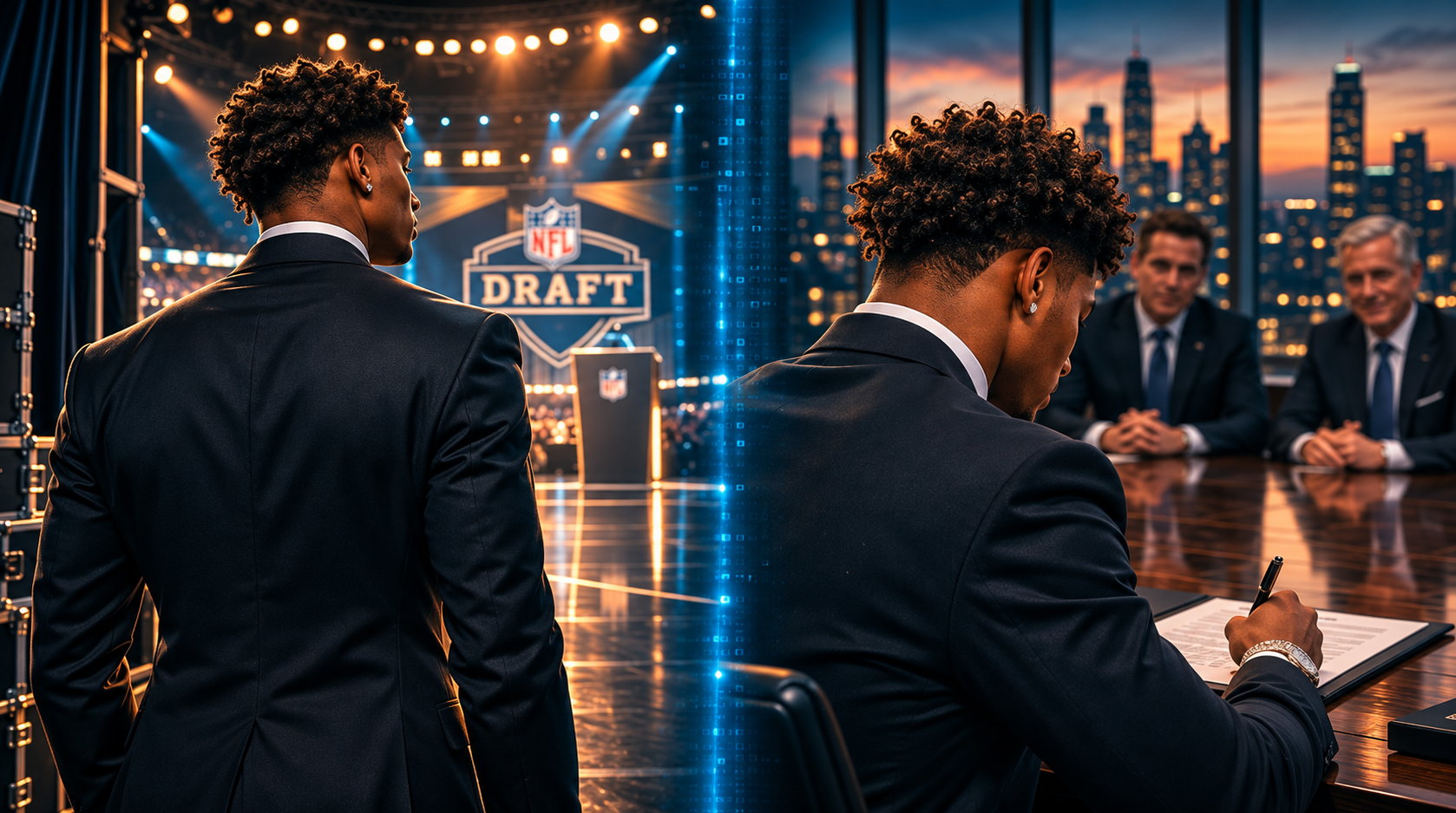
What happens when the athlete is not the one in control is on the record too. Shortly before the 2016 NFL Draft, an old video appeared on Laremy Tunsil’s Twitter account, which he said had been hacked. He had been considered a potential first overall pick and went 13th. An NPR reporter estimated the slide probably cost him six to eight million dollars.
None of this is history. The last six months alone:
• 17 November. Tennis player Sloane Stephens’ Los Angeles home was targeted in a burglary attempt while she was away. Nothing was taken and three men were arrested, ESPN reported.
• Reported 17 November. Pittsburgh police issued three arrest warrants over an August burglary at the home of Steelers rookie Max Iheanachor, with $150,000 to $250,000 in jewelry and designer handbags reported taken, according to Yahoo Sports.
• October. The NCAA joined the Bad Actor program, which identifies people who harass athletes online so that sports-books can restrict their betting accounts. In a 2025 NCAA study, 46% of Division I men’s basketball respondents reported negative or threatening messages from someone who had bet on their games, Sports Law Expert wrote.
• September. The FBI and NCAA warned that criminals are reaching college athletes through fake brand offers and fake account alerts. An FBI agent told WMTV that criminals know young athletes now have NIL money.
• May. Brooklyn Nets forward Michael Porter Jr. said he needed to move after his home address was reportedly posted to an Instagram account with more than 3 million followers, Fox News reported.
Not every one of these began with something found online. Together they show how much attention, wanted and unwanted, now follows an athlete’s name.
Plenty of companies will take your home address off data broker and people-search sites. That work matters, and we do all of it: PII removal and suppression, de-indexing from search engines, dark web and breach monitoring, and daily monitoring by our in-house security operations centre with real-time exposure alerts.
But removal answers only half the question. It deals with what people should not find. It says nothing about what they should.
Decisive puts the athlete in charge of the whole picture, in three steps.
1. See it first. We show you what an agent, a general manager, a sponsor or a fan can find about you today. You walk into every meeting already knowing what the other side has read.
2. Remove and prevent the harmful. Home and family records come down, risky posts get flagged before they spread, and leaked account details are caught early.
3. Promote the positive. We work to put what you want seen where people look first: your performance, your character, your work in the community, your brand.
None of this asks an athlete to disappear. The public profile is the business, and it should keep growing. Control means the brand is public, the address and the family routine are private, and you chose which is which.
The return shows up in four places.
1. More of the right exposure. When your best work is what people find first, every search for your name works in your favor.
2. Leverage in negotiations. A general manager or collective that researches you and finds nothing to worry about has one less reason to discount an offer. You and your agent negotiate knowing what the other side knows.
3. A stronger case with sponsors. Brands are advised to check an athlete’s reputation before signing and to protect themselves with morals clauses. A clean, strong public record makes you an easier yes.
4. Protection for what you have earned. Crews that work from public addresses and real-time posts have less to work with, and a bad night online is less likely to catch you by surprise.
No one can promise a specific contract number, and no one can guarantee that a burglary, a hack or a headline will never happen. We will not claim either. What we can give an athlete is a clear view of what the world sees, and the tools to shape it.
An athlete’s value is set at a few moments: a commitment, a transfer window, a sponsor’s decision, the draft. The time to take control is before the next one, while there is still room to remove what should not be there and build up what should.
If you are an athlete, or the parent of one, try this today. Search your name the way a general manager or a sponsor would, and ask whether you would be comfortable with them reading every result. If the answer is no, or you are not sure, message us at Decisive.
• ESPN, 22 April 2017: how four NFL teams monitor prospects’ social media
• BakerHostetler, 30 July 2026: advice to brands on reviewing athletes and using morals clauses
• Sports Illustrated, 21 November 2024: NFL memo on burglary crews
• Legal Sports Report, 16 October 2024: NCAA and Signify abuse study figures
• NPR via Texas Public Radio, 29 April 2016: estimate of what the draft slide cost Laremy Tunsil
• Fox News, 29 April 2016: Tunsil video, hacking claim, projected and actual pick
• ESPN, 18 November 2026: burglary attempt at Sloane Stephens’ home
• Yahoo Sports, 18 November 2026: warrants over the burglary at Max Iheanachor’s home
• Sports Law Expert, 3 November 2026: NCAA joins the Bad Actor program; 2025 study figure
• WMTV, 14 September 2026: FBI and NCAA warning on schemes aimed at athletes
• Fox News, 3 May 2026: Michael Porter Jr.’s address posted online



© 2026 All rights reserved | License: A11643701
A Wyoming LLC, Headquartered in Austin, TX, Global Presence