

Written by Lindsey Yagi-Hatake
12 Oct 2026
Flock cameras are making headlines. Here’s what they collect, why it matters, and five practical steps you can take to protect your privacy.
Your license plate is designed to be seen.
But there’s a difference between someone seeing your car at an intersection and a network of cameras creating a searchable history of where it’s been.
You’ve probably noticed surveillance cameras in everyday places, even parking lots outside stores like Home Depot. You might have driven right past one without giving it a second thought.
But here’s the question: What happens to that information after you drive away?
That’s the privacy debate surrounding Flock Safety’s automated license plate readers.
On October 1, 2026, a federal judge in Oklahoma ruled that a deputy’s warrantless search of approximately one month of a driver’s vehicle-location history violated the Fourth Amendment.
The search involved automated license plate reader (ALPR) systems, including Flock Safety technology, and returned more than 50 records of the vehicle’s movements.
The ruling doesn’t make Flock cameras illegal nationwide. But it raises an important question about the privacy implications of turning public observations into searchable travel histories.
Read the federal court’s opinion in United States v. Kyle.
Automated license plate readers can capture:
These observations can be stored and searched, allowing authorized users to identify vehicles matching particular criteria.
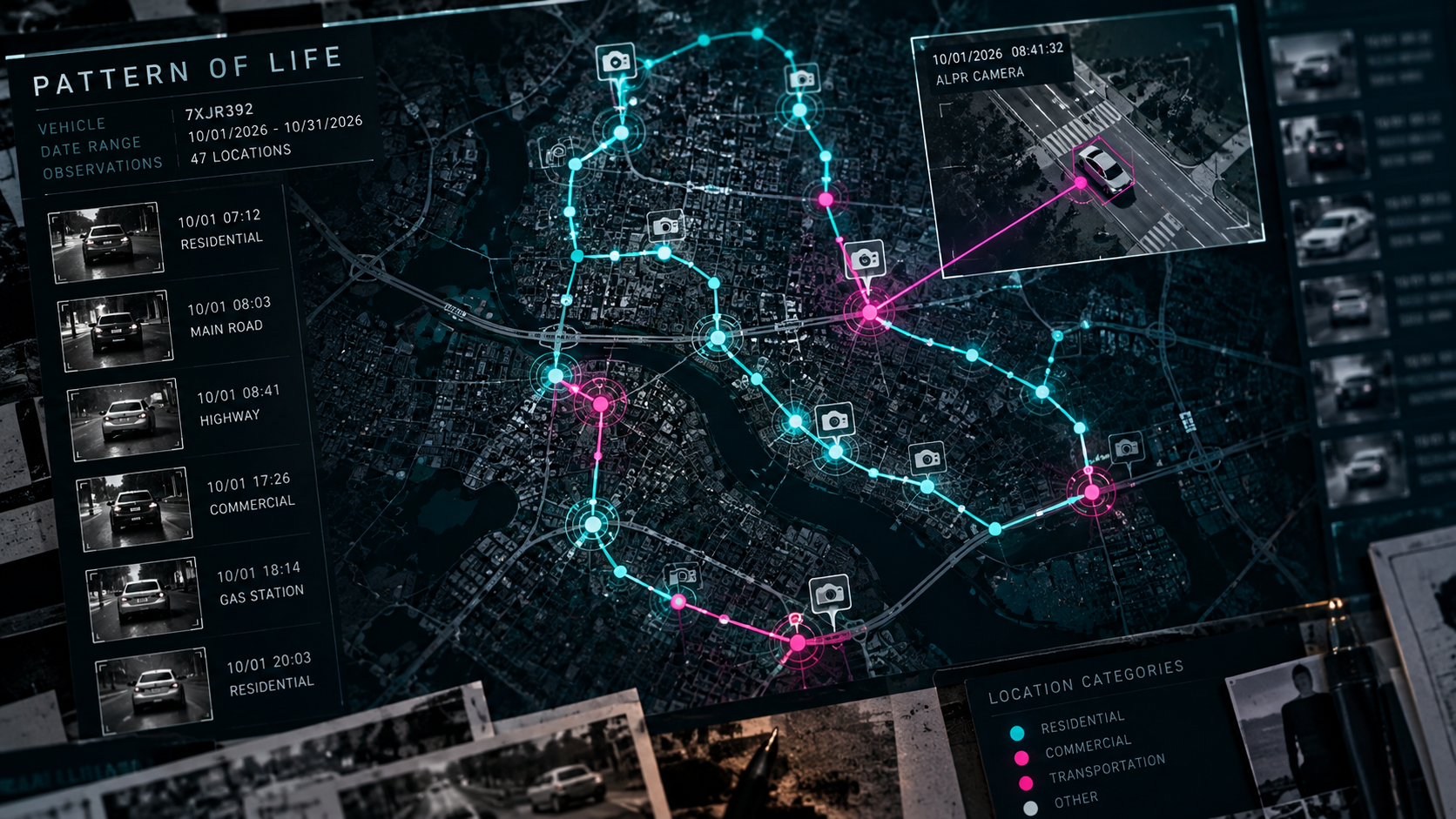
One camera captures a vehicle.
A network of cameras can reveal patterns.
Your commute. Your regular stops. Places you visit repeatedly.
Individually, those observations might reveal very little. Connected together, they can suggest where someone lives, works, or spends their time.
These patterns don’t necessarily identify the driver. But when combined with other available information, they can reveal details someone never intentionally shared.
This is a familiar principle in open-source intelligence (OSINT): ordinary information becomes more revealing when correlated with other data.
As we discuss in our article on counter-surveillance and modern privacy, everyday routines can create patterns of exposure that extend beyond the digital world.
Information doesn’t have to be secret to become sensitive when it’s connected.
You don’t need to be a cybersecurity professional to start taking control of your privacy.
Here are five practical steps.
Visit DeFlock, a crowdsourced map of automated license plate readers.
Search your community to see where cameras have been reported. The map isn’t necessarily complete, but it’s a useful starting point for understanding local surveillance infrastructure.
Visit Have I Been Flocked? and enter your license plate number.
The website searches publicly available Flock audit logs to identify recorded database searches involving your plate.
Important distinction: these results show documented searches, not every time your vehicle was photographed. A missing result doesn’t mean your vehicle hasn’t been recorded or your plate has never been searched.
Depending on your state’s DMV rules, you may be able to request a new license plate number for a modest additional fee.
Changing your plate number periodically may interrupt straightforward tracking based on a single plate identifier.
However, it doesn’t erase previously collected records, and other vehicle characteristics may still allow records to be associated.
Check your state’s requirements and fees before making changes.
Find out how your local agencies use ALPR technology.
Look for policies addressing:
If those policies aren’t publicly available, consider requesting them through your state’s public records process.
Your vehicle is only one part of your overall privacy exposure.
Public records, social media, data brokers, and other accessible information can provide additional context about your routines and relationships.
Understanding how these pieces connect is an important part of managing your digital footprint.
The goal isn’t to disappear. It’s to understand what information is being collected, how it connects, and where you can reduce your exposure.
Wondering how surveillance technology like Flock cameras affects your privacy?
Reach out to Decisive Resources and speak directly with a privacy manager who can help you understand your exposure and your options.
Because privacy isn’t something you buy. It’s something you build. And we’re here to help you build it.



© 2026 All rights reserved | License: A11643701
A Wyoming LLC, Headquartered in Austin, TX, Global Presence


