

Written by Luke Sloan
23 Jul 2026
Most people who come to us have already tried. They have a VPN. They pay for a data broker removal service. Maybe they’ve set up masked emails, or virtual cards, or a PO box they route mail through. Each of those tools does one thing, and most of them do that one thing reasonably well.
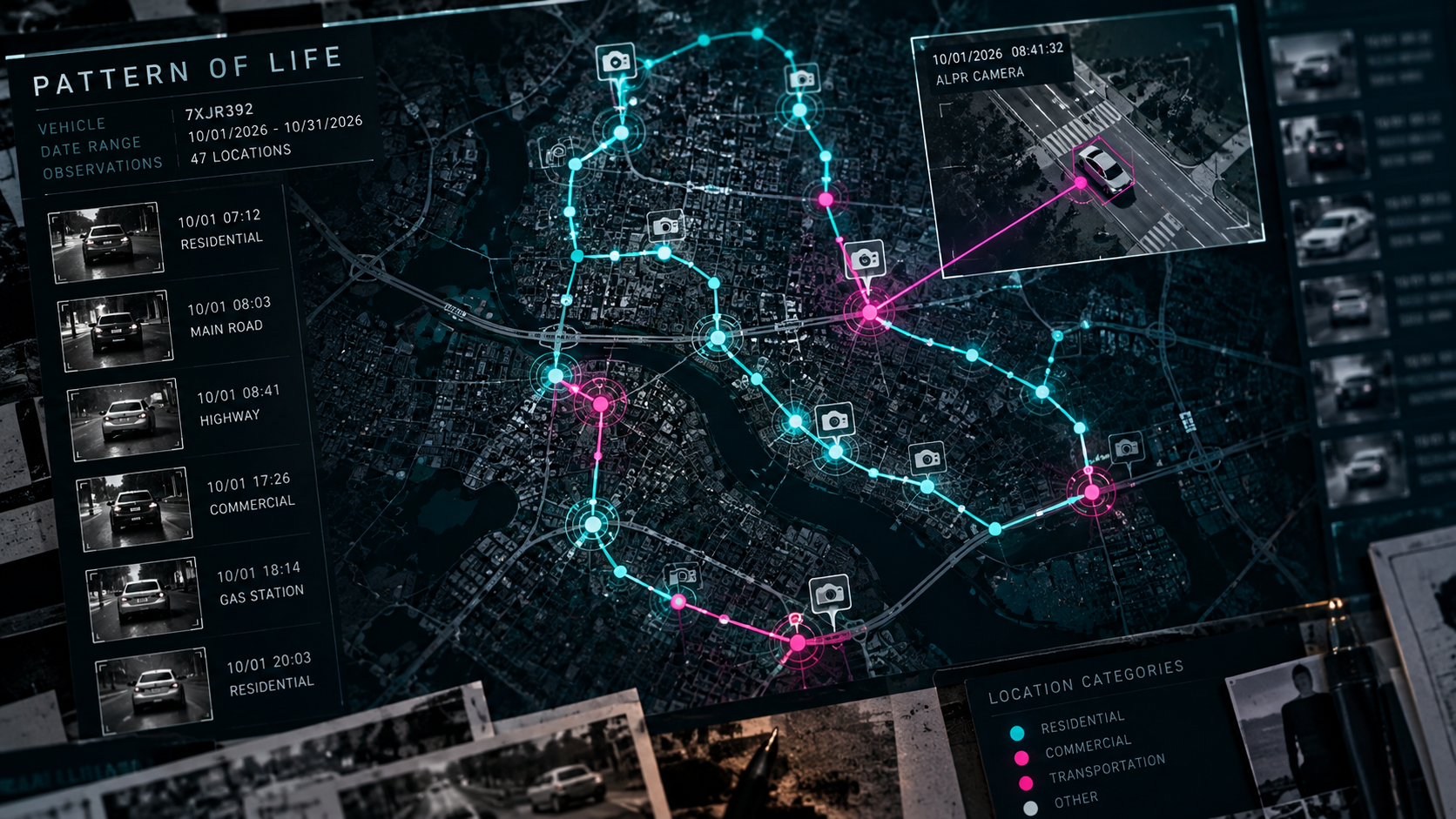
The problem is that privacy does not come in pieces. It is not a stack of subscriptions. A person’s exposure lives in the gaps between the tools, and no single service is watching the gaps. Consider what happens over a normal year. You buy a car, and the manufacturer’s app logs your location and passes the driving data downstream. You move, and the new utility account ties your real name to your new address in a public record within weeks. You sign up for a streaming service under your own name because it was two in the morning and you weren’t thinking about it. On their own, none of these feel like a breach. Together, they rebuild the exact profile you spent money trying to erase.
This is the flaw in the point solution model. The opt-out company removes you from broker databases, then a fresh record gets created next month and nobody is watching (Even though some claim they do.) The VPN encrypts your traffic while your phone settings leak the same information through a side door. Every vendor is optimizing for their slice, and the slices do not add up to a whole.
We built the firm around the whole.
That means we do not sell a product. We take responsibility for a person’s privacy across every surface we can find, and there are far more surfaces than most people expect. Vehicles. Utilities. Streaming and retail accounts. Phone and device configuration. Payment methods. Mail and shipping. Property records. The accounts and settings attached to services the client forgot they ever signed up for. We map it, we build the infrastructure, then we maintain it, because privacy is not a state you arrive at. It degrades the moment you stop paying attention, and most people do not have the time or the interest to pay attention. What separates us from everyone else is the loyalty, tenacity and a commitment to go above and beyond for each individual client so they can experience the freedom of privacy.
When a client contacts us, a person answers. Not a ticket queue, not a chatbot, not a form that routes to an offshore team reading from a script. The same consultants who built the client’s infrastructure are the ones who pick up. They already know how that client lives, what they care about, and what they refuse to give up. That context is the entire job. You cannot automate a decision that depends on knowing this particular client will never tolerate a two-factor prompt at checkout, or that another one travels constantly and needs a setup that survives being in a different country every week.
No two clients get the same build. Some want to disappear as completely as the law allows. Others want their convenience left intact and only the sharpest exposures closed. A founder with a public company faces different threats than a family protecting children from a specific person. We start by learning how someone actually operates, then design around it. The tools are the easy part. Knowing which tools to apply, in what order, for this specific life, is the work.
People sometimes ask why they cannot assemble all of this themselves from a dozen services. They can try. What they usually find is that the tools conflict, the maintenance never stops, and the moment something breaks they are alone with a support line that has no idea who they are. Privacy built from parts becomes a second job. We are the people who hold the whole thing so the client does not have to think about it.
That is the premise. Comprehensive coverage, built by hand, held by humans who know you. If a subscription is all you need, there are good ones, and we will happily tell you which. If you want someone to own and manage the problem for you, that is us.


© 2026 All rights reserved | License: A11643701
A Wyoming LLC, Headquartered in Austin, TX, Global Presence